A Between Sources series · In production
PYRAMIDS
What were they built to do?
The oldest pyramids, measured and unmeasured. Each part ends on the same list: the tests nobody has done yet.
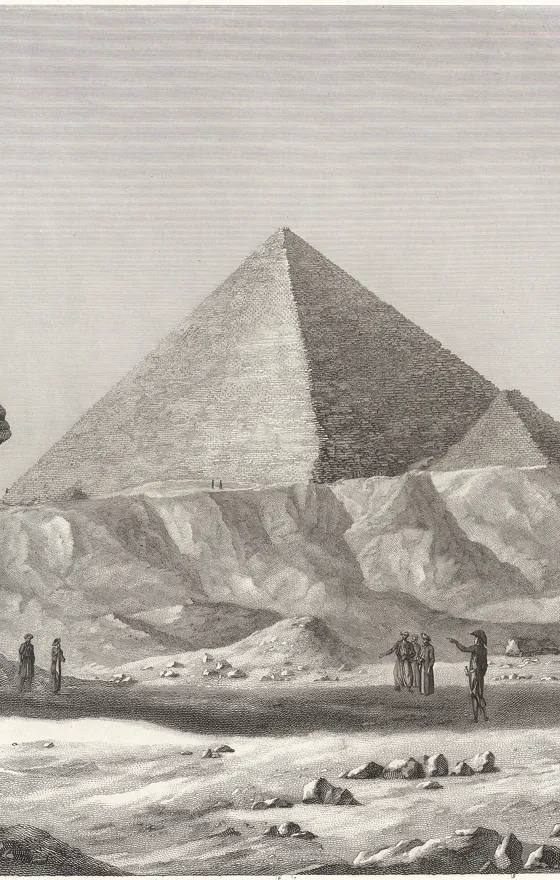
Through the door: Description de l’Égypte, Antiquités vol. V, pl. 11 (Panckoucke edition). Public domain.
The question the series carries
What were the oldest pyramids built to do, and what would the stones tell us if we finally measured them?
Everyone knows what a pyramid is for. A king was buried in it. But walk down into the oldest giants and look at what was actually found: an empty box with its door still plastered shut, a sealed vat with nothing in it, bones from the wrong thousand years.
And in one pyramid in the desert south of Cairo there is a smell. Visitors say it burns the throat. The channel’s maker has smelled it himself. Guides say bats. A self-taught chemist says it is the trace of an ancient chemical plant. Nobody, as far as we could find, has ever measured it.
PYRAMIDS asks what the first great pyramids were built to do. Every answer gets its strongest form: tomb, chemical plant, cast stone, power plant, star map, and the maker’s own model, an older core found and reworked by later builders. Along the way we build a list of the things nobody has measured, most of them cheap. The finale puts the whole list on screen.
The test card, shown whenever a new claim arrives
- Who said it?
- What was measured?
- What would settle it?
The series device
The Untested List
A ledger card, like a lab notebook page. Each time an episode meets something nobody has measured, one line is written onto the list, with its cheapest test. The finale opens the full list and reads it, cheapest first.
Every answer to “what was it for?” is tested the same way, the tomb answer included. Then the same three questions, every time.
“I record whatever is told me.”
It returns whenever a TOLD claim is about to be tested.
Episodes